Growing herbs at home is one of the easiest ways to start gardening. Herbs grow well in containers, raised beds, and small backyard gardens while providing fresh flavor for cooking all season long.
Many beginner gardeners choose herbs because they require little space, simple care, and regular harvesting.
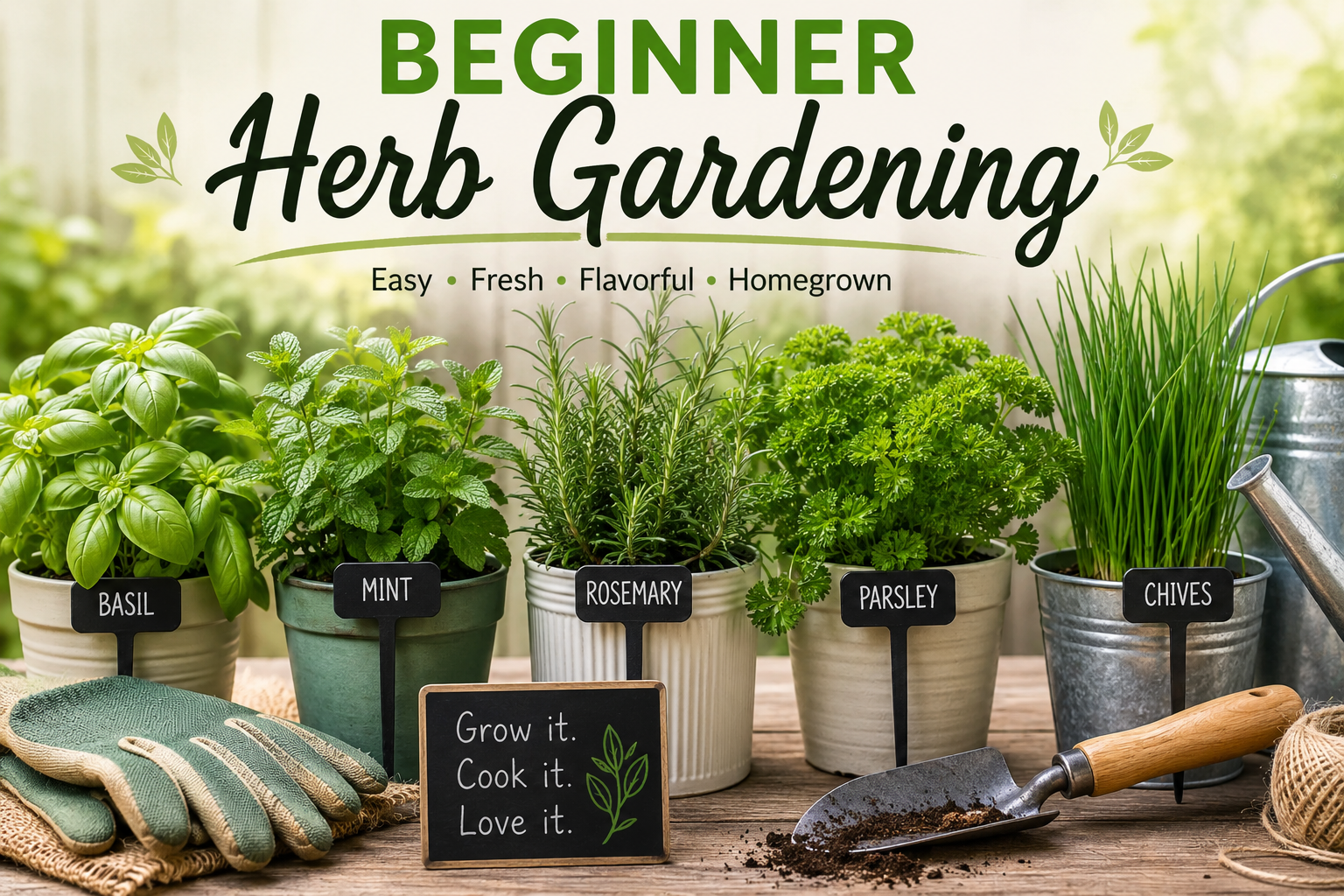
Popular herbs like basil, mint, rosemary, parsley, and chives can thrive indoors or outdoors with proper sunlight and watering.
Best Herbs for Beginners
Basil
Basil grows quickly in warm weather and loves full sunlight.
It works well in containers and raised garden beds while producing fresh leaves throughout the growing season.
Mint
Mint is one of the easiest herbs to grow for beginners. It spreads quickly and grows best in containers to prevent overcrowding other plants.
Rosemary
Rosemary prefers sunny locations with well-drained soil. This hardy herb adds fragrance to gardens while requiring very little maintenance once established.
Parsley
Parsley grows well in cooler temperatures and can be harvested multiple times. It works great in small spaces and container gardens.
Chives
Chives are low-maintenance herbs that grow back every season.
Their mild onion flavor makes them popular for beginner herb gardens.
Indoor vs Outdoor Herb Gardening
Indoor herb gardening works well near sunny windows where plants receive at least six hours of sunlight daily.
Small containers and proper drainage help herbs grow successfully indoors.
Outdoor herb gardens provide more sunlight and airflow, allowing herbs to grow larger and produce more harvests during warmer months.
Best Containers for Herbs
Containers with drainage holes help prevent root rot and overwatering problems.
Terracotta pots, raised beds, and small planter boxes are excellent options for beginner herb gardens.
Popular herbs for containers include:
- Basil
- Mint
- Thyme
- Parsley
- Oregano
- Chives
Soil and Watering Tips
Healthy herbs grow best in nutrient-rich soil with proper drainage.
Potting soil mixed with compost helps herbs develop strong roots and healthy growth.
Most herbs prefer moderate watering. Allow the soil to dry slightly between watering sessions to avoid overwatering.
Sunlight Requirements
Most herbs need six to eight hours of sunlight daily. Basil, rosemary, oregano, and thyme prefer full sun, while parsley and mint can tolerate partial shade.
Common Beginner Herb Gardening Mistakes
Many beginners make simple mistakes that can slow herb growth:
- Overwatering herbs
- Using containers without drainage
- Placing herbs in low sunlight
- Harvesting too much at once
- Crowding plants too closely together
Easy Harvest Tips
Harvest herbs regularly to encourage continued growth. Pinching leaves from basil and mint helps plants grow fuller and healthier throughout the season.
Fresh herbs can be used in:
- Salads
- Soups
- Pasta dishes
- Herbal teas
- Homemade sauces
Recommended Gardening Tools
Beginner herb gardeners should start with a few simple tools:
- Hand trowel
- Gardening gloves
- Watering can
- Small pruning scissors
- Raised planter box
- Organic potting soil
Frequently Asked Questions
What is the easiest herb to grow?
Mint, basil, and chives are among the easiest herbs for beginner gardeners.
Can herbs grow indoors?
Yes. Most herbs grow well indoors near bright sunny windows with proper watering.
How often should herbs be watered?
Most herbs should be watered when the top inch of soil feels dry.
Do herbs grow better in pots or garden beds?
Herbs grow well in both containers and raised garden beds, depending on available space and sunlight.
Final Thoughts
Beginner herb gardening is an easy and rewarding way to start growing plants at home.
With proper sunlight, watering, and simple maintenance, herbs can provide fresh harvests throughout the growing season while improving outdoor or indoor spaces.